Health and Safety Policy for Oven Cleaning
 This Health and Safety policy outlines standards and procedures for safe oven cleaning work across domestic, commercial and industrial settings. It is intended to protect oven cleaners, occupants and property by defining responsibilities, safe systems of work, and required protective measures. The policy covers routine oven maintenance, deep oven cleaning, and specialist professional oven cleaning tasks. Managers and operatives should use this document as a framework to develop site-specific safe work practices, ensuring that all activities are planned, supervised and carried out with risk control as the primary objective.
All personnel engaged in oven cleaning activities must be suitably trained and assessed as competent prior to undertaking duties. Training should include correct use of cleaning agents, appropriate application techniques, safe handling of tools, electrical isolation procedures, and awareness of potential hazards such as burns, slips, and chemical exposure. Supervisors are responsible for ensuring induction on site-specific risks, arranging refresher training, and maintaining documented evidence of competence and instruction. Personal development plans should support ongoing skill improvement for both domestic oven cleaning and large-scale commercial oven maintenance teams.
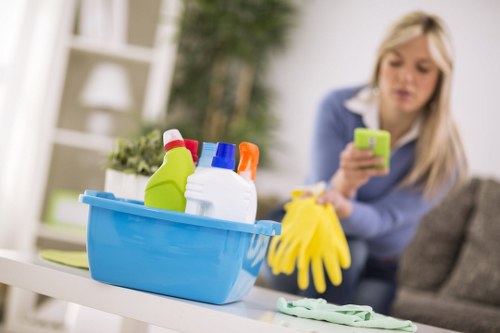 Thorough risk assessment is central to safe oven cleaning operations. A pre-job survey must identify hazards including hot surfaces, residual grease and carbon deposits, electrical connections, poor ventilation, confined access spaces in some commercial units, and trip hazards from hoses or equipment. The assessment should capture control measures, emergency considerations and methods to communicate risks to occupants or co-workers. Implementing control measures such as secure cord routing, floor protection, signage and appropriate ventilation will reduce exposure and allow oven cleaners to work safely and efficiently.
Personal Protective Equipment and Safe Working
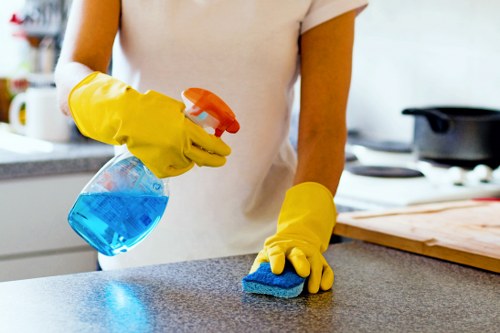
Appropriate personal protective equipment (PPE) must be provided, fitted and used for all oven cleaning tasks. Typical PPE includes chemical-resistant gloves, splash-resistant goggles, aprons or full coveralls, slip-resistant footwear and, where necessary, suitable respiratory protection. Selection of PPE should be driven by the risk assessment and take into account the nature of cleaning chemicals and the ventilation of the workspace. PPE must be maintained in clean, serviceable condition and replaced when worn or damaged; disposable items should be discarded responsibly after single use.
![A woman with light brown hair tied in a ponytail, wearing glasses, a white short-sleeved shirt, and yellow rubber gloves, is holding a blue spray bottle and a white cloth. She appears to be cleaning or preparing to clean, with her focus directed towards her cleaning task. The background is plain white, emphasizing her and her cleaning supplies. This image highlights professional cleaning practices suitable for residential or commercial environments, including kitchens or offices, and subtly supports local cleaning services such as those provided by Oven Cleaning in [TOWN] or within the [POSTCODE] area, emphasizing meticulous and safe cleaning routines.](/pub/_photos/cleaning/f1439119248.jpg) Equipment and chemical safety are critical to preventing incidents. Only approved detergents and degreasers should be used, and manufacturers' instructions for dilution and application must be followed precisely. Never mix cleaning chemicals as this can generate hazardous fumes or cause violent reactions. Tools and powered equipment should be inspected before use, and electrical appliances should have an up-to-date inspection record where required. When using powered tools near wet areas, ensure RCD protection and dry handling procedures to reduce electrocution risk. For high-pressure or steam cleaning methods, training and controlled operating procedures are mandatory.
Equipment and chemical safety are critical to preventing incidents. Only approved detergents and degreasers should be used, and manufacturers' instructions for dilution and application must be followed precisely. Never mix cleaning chemicals as this can generate hazardous fumes or cause violent reactions. Tools and powered equipment should be inspected before use, and electrical appliances should have an up-to-date inspection record where required. When using powered tools near wet areas, ensure RCD protection and dry handling procedures to reduce electrocution risk. For high-pressure or steam cleaning methods, training and controlled operating procedures are mandatory.
Safe systems of work must be documented and available to operatives. Core elements include:
- Clear pre-job checks and site surveys
- Electrical and gas isolation where interior access is required
- Designated exclusion zones to protect residents and staff
- Use of appropriate lifting techniques or mechanical aids for heavy components
- Measures for safe use of steam and pressure-cleaning equipment
Emergency Response, Waste Management and Continuous Improvement
Robust emergency arrangements must be in place and clearly understood by everyone involved in oven cleaning tasks. First aid kits and trained responders should be readily available, and staff must know how to respond to chemical splashes, burns, inhalation, or accidental fires. Follow the safety data sheets for specific first aid actions and seek medical assistance if exposure is significant. When cleaning deeply soiled or flammable ovens, remove ignition sources and keep an appropriate fire extinguisher nearby. Reporting procedures for incidents and near-misses should be immediate to allow timely investigation and remedial action.
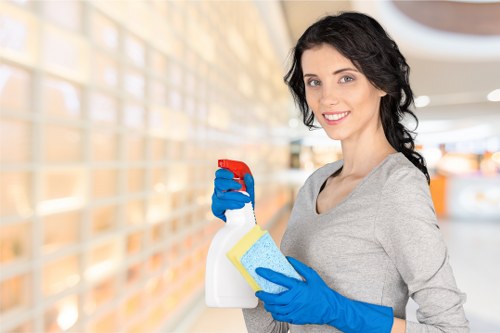 Waste and environmental management are part of responsible oven cleaning practice. Collect and contain used cleaning solutions, contaminated rags, filters and residues and dispose of them in accordance with environmental best practice and local arrangements without listing legal specifics here. Prevent drain contamination by using appropriate containment and transfer waste to labelled, secure containers. Favor less hazardous cleaning products and techniques where possible to reduce environmental impact, and ensure spill kits and absorbent materials are available for immediate response to accidental releases.
![A woman with brown hair tied back in a bun is seen smiling as she cleans a white kitchen countertop. She is wearing a light pink shirt and is using a yellow cloth to wipe the surface. On the counter, there is a transparent spray bottle containing blue cleaning solution, positioned to her left, and a small glass container nearby. The background features a bright, modern kitchen with white walls and a power outlet visible behind her. The environment appears clean and tidy, with natural light illuminating the space, reflecting the importance of professional cleaning services such as those offered by Oven Cleaning in the UK. The scene conveys a sense of thorough, careful cleaning in a domestic kitchen environment, subtly highlighting the relevance of reliable cleaning standards suited for homes in the [POSTCODE] area, possibly in or around [TOWN].](/pub/_photos/cleaning/f1451911784.jpg) Monitoring, documentation and continual improvement underpin a safe working culture. Maintain clear records of risk assessments, training, PPE issue, equipment inspections, and incident reports. Regular audits, toolbox talks and debriefs help reinforce safe behaviors and identify opportunities for improvement. Encourage reporting of unsafe conditions and ensure managers investigate and act upon reports promptly. By assigning clear responsibilities and promoting ongoing learning, teams delivering oven cleaning and oven maintenance services can sustain high standards of safety and service quality.
Monitoring, documentation and continual improvement underpin a safe working culture. Maintain clear records of risk assessments, training, PPE issue, equipment inspections, and incident reports. Regular audits, toolbox talks and debriefs help reinforce safe behaviors and identify opportunities for improvement. Encourage reporting of unsafe conditions and ensure managers investigate and act upon reports promptly. By assigning clear responsibilities and promoting ongoing learning, teams delivering oven cleaning and oven maintenance services can sustain high standards of safety and service quality.