Insurance and Safety for Oven Cleaning Professionals
 Oven cleaning contractors and domestic oven cleaning teams must prioritise safety and insurance with every job. This page outlines the essential protections and procedures we follow to ensure safe, compliant oven deep clean services. From comprehensive public liability insurance to robust staff training and personal protective equipment, our approach reduces risk to customers, staff, and property while delivering a reliable oven service.
Public liability is fundamental to any professional oven servicing operation. We carry full indemnity insurance that covers accidental damage to property, bodily injury to third parties and financial loss arising from our work. Our policies are maintained at levels appropriate for both residential and commercial oven cleaning projects, ensuring that when a mistake occurs ??? whether a grease fire, surface damage, or accidental spillage ??? customers are protected and remediation is handled promptly.
 Risk management in oven maintenance includes pre-job planning and on-site controls. Before any oven clean, our technicians perform a site-specific check to identify hazards such as faulty wiring, gas leaks, or proximity to combustible materials. This step is part of the wider risk assessment process that informs our method of work, choice of cleaning agents, and time allocation for the job. A documented assessment reduces uncertainty and supports safe outcomes during every oven clean assignment.
Staff training is at the heart of safe oven cleaning operations. All operatives undergo accredited training that covers chemical handling, safe use of high-temperature equipment, gas appliance awareness and manual handling techniques relevant to oven removal and reinstallation. Regular refresher courses, toolbox talks and competency assessments ensure that our team stays current with the latest safety practices and regulatory expectations for commercial oven cleaning and domestic services alike.
 Training also includes emergency response protocols and first aid. Technicians learn to identify symptoms of chemical exposure, respond to burns, isolate electrical supplies, and what to do if an appliance is suspected of being unsafe to operate. This preparedness reduces the likelihood of escalation and ensures that staff can intervene safely and effectively until specialist help arrives.
Personal protective equipment (PPE) is selected and used based on the risk assessment for each oven clean. Typical PPE for oven deep cleaning includes chemical-resistant gloves, eye protection, aprons, and respiratory protection where aerosols or strong fumes may be present. We encourage the use of layered protection ??? for example, disposable nitrile gloves under thicker chemical-resistant gauntlets ??? to maximise safety without compromising dexterity during delicate internal cleaning tasks.
Our cleaning chemicals are chosen for effectiveness and safety. We maintain up-to-date Safety Data Sheets (SDS) for every product used in professional oven cleaning and ensure that staff understand correct dilution, application and neutralisation procedures. Where possible, we use low-fume, biodegradable formulations to reduce exposure risks and environmental impact. Strong solvents are only used when absolutely necessary and with enhanced PPE and ventilation controls in place.
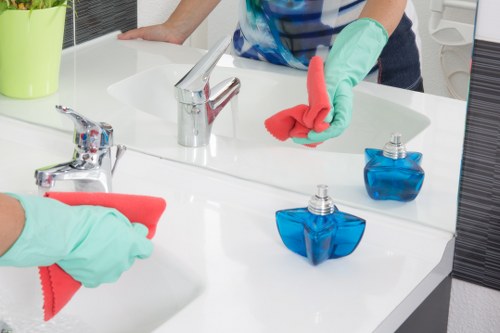
![A person wearing bright blue rubber gloves is cleaning a white countertop in a well-lit kitchen, with large windows in the background allowing natural light to fill the space. The individual is holding a yellow spray bottle of cleaning solution in one hand and a yellow sponge or cleaning cloth in the other, using it to wipe the surface. The kitchen features a clean, smooth, white work surface with minimal clutter, emphasizing hygiene and cleanliness, suitable for professional cleaning services like Oven Cleaning. The background shows a tidy kitchen setup, with light-colored cabinetry and a neutral atmosphere, reflecting a professional approach to maintaining hygiene standards in residential or commercial kitchens, possibly serviced by local cleaning providers near [POSTCODE] or within [TOWN]. The scene highlights careful, detail-oriented cleaning actions typical of services offered by Oven Cleaning, ensuring surfaces are sanitized and spotless, ready for safe food preparation or daily use.](/pub/_photos/cleaning/f1294748456.jpg)
Risk Assessment Process
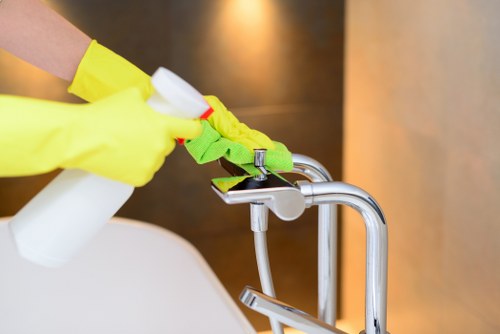
The risk assessment process is structured, documented and revisited whenever job conditions change. It follows these steps: identification of hazards, determination of who might be harmed and how, evaluation of existing controls, recording findings and implementing additional measures as required. This process is iterative ??? if a new hazard emerges mid-job, work stops until the assessment is updated and safe controls are reinstated.![In a well-lit kitchen or utility room, a professional cleaner wearing blue rubber gloves and a light blue shirt is using a spray bottle and a yellow cleaning cloth to wipe down a metallic handle on a door frame or appliance. The surface appears clean and shiny, suggesting regular maintenance and attention to detail typical of professional cleaning services. The background is slightly blurred, focusing on the hands and cleaning tools, emphasizing careful and thorough cleaning practices. The scene illustrates the diligent work involved in maintaining hygienic and polished kitchen or household surfaces, supporting the reputation of reputable cleaning companies such as Oven Cleaning, especially within areas like [POSTCODE] or [TOWN], known for their reliable cleaning services. The atmosphere conveys a sense of professionalism and cleanliness, aligning with standards established in the UK for residential and commercial cleaning, particularly in kitchens where hygiene and surface care are paramount.](/pub/_photos/cleaning/f1297234712.jpg)
Operational Controls and Safe Systems of Work
We operate under clear safe systems of work for both small domestic oven cleans and larger commercial kitchen projects. Controls include isolating electrical and gas supplies, protecting surrounding surfaces from chemical damage, using drip trays and containment for runoff, and ensuring adequate ventilation. Supervisors perform a final safety checklist before reassembly and handover to confirm that all safety critical items have been addressed.Insurance and documentation go hand-in-hand with safety. For every job we produce a written record that includes the risk assessment summary, equipment used, PPE issued, and confirmation of public liability cover. This documentation not only demonstrates due diligence but also supports transparent communication with customers about the level of protection and the precautions taken during the oven cleaning process.
Clients engaging commercial oven cleaning services should expect clear evidence of insurance, training credentials, and copies of relevant SDS documents on request. We keep our policies at a level suitable for restaurant kitchens, bakery ovens and other high-use environments where the consequences of equipment failure or contamination can be severe. Having the right cover in place is a mark of professionalism and protects both parties should an incident occur.
In summary, effective oven cleaning safety combines comprehensive public liability insurance, continuous staff training, appropriate PPE, and a dynamic risk assessment process. Together these elements create a resilient safety culture that delivers high-quality oven maintenance while minimising the potential for harm. Whether you require a domestic oven clean or a complex industrial kitchen service, prioritising these safeguards ensures work is completed safely, legally and to a high standard.